

Victoria

Our courses

AQF Level 3 Chemical Training: Initial Accreditation
Face to face chemical training for first-timers. Gain practical skills, ensure compliance, and start your safe chemical journey.

AQF Level 3 Chemical Training: Update Re-Accreditation
Face to face chemical training. Refresh your chemical application knowledge in a half-day workshop. Stay compliant with updated…

AQF Level 3 Chemical Training: Update Re-Accreditation – Online
Complete your chemical safety training update entirely online, at your own pace. Ideal for remote learners and busy…
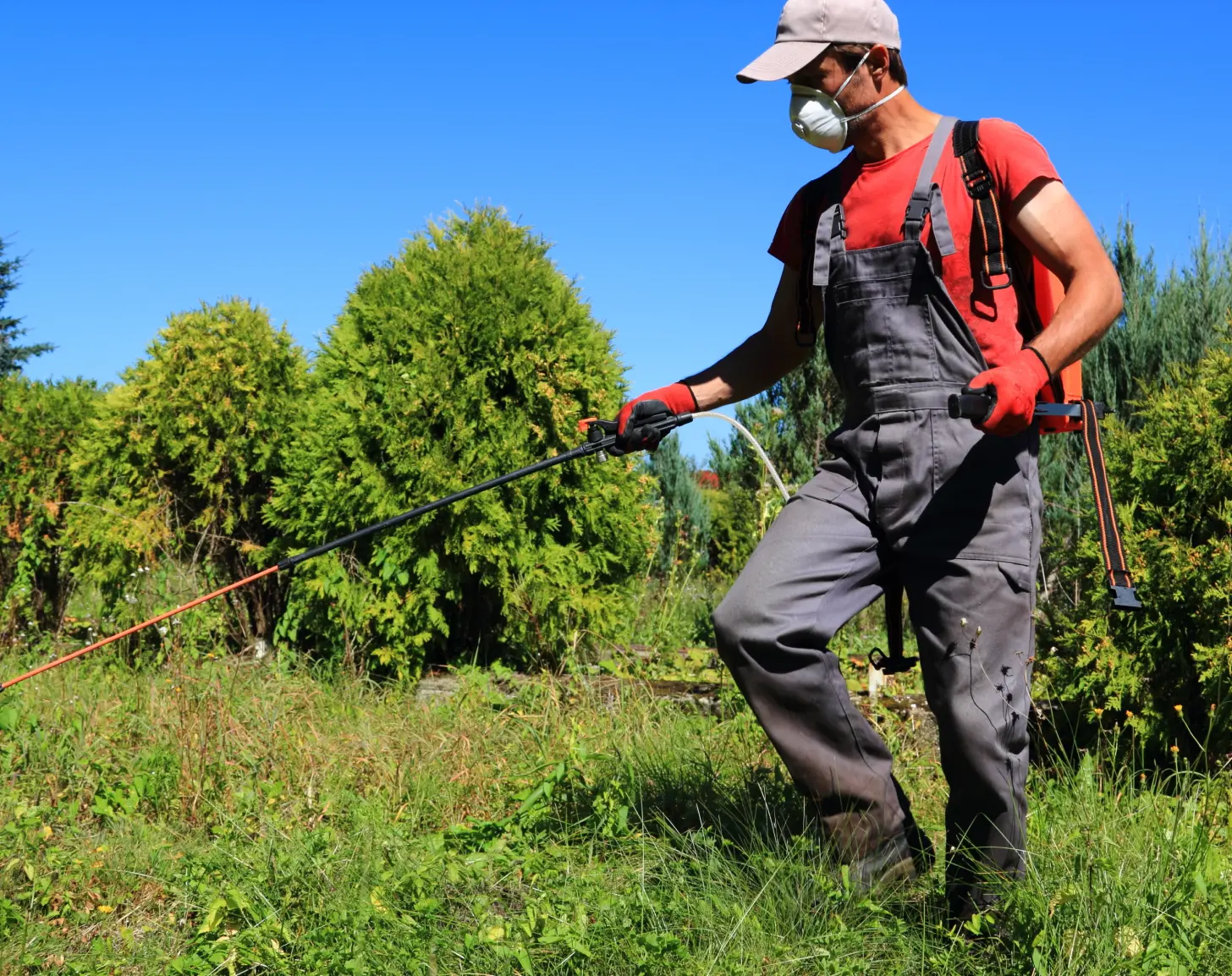
In-House Training
Tailored, on-site chemical safety training at your workplace. Ensure compliance, reduce risks, and empower your team with best…

AQF Level 3 Chemical Training: Initial Accreditation – Online
Combine online study with live Zoom sessions for hands-on chemical training. Interact in real-time and complete practical assessments…

AQF Level 4 Chemical Risk Management
To enable those who supervise chemical users to plan for and manage the risks associated with using and…

AQF Level 2 Chemical Training: Apply Chemicals Under Supervision
Practical based course for supervised chemical application. Gain foundational knowledge, hands-on practice, and ensure compliance.

Control Weeds – Online
Online based course to identify and control weeds effectively. Learn safe chemical application methods and meet potential licensing…

1080 Training Victoria – Online
Learn to safely manage 1080 & PAPP bait products in this self-paced online course. Ideal for pest control…
have questions?
Frequently Asked Questions (FAQs)
WHY Do I have to be trained to apply chemicals in Victoria.
Following is an extract from the Victorian Government Publication:
A guide to using agricultural chemicals in Victoria
Ground -based spray application
“Training is a vital part of safe agricultural chemical use. Agricultural chemicals can be dangerous if used incorrectly. People who are regularly exposed to chemicals or use them on a regular basis are at the greatest risk.
Anyone who will be using chemicals should complete an appropriate chemical use training course. These courses are designed to ensure users have the knowledge and skills they need to safely transport, handle, apply and store agricultural chemicals.
Successful completion of chemical use training courses is also a prerequisite for certain licences and permits.”
WHICH Legislation covers training in Victoria?
The Agricultural and Veterinary Chemicals (Control of Use) Act 1992 (‘the Act’) controls the use of agricultural and veterinary chemicals in Victoria and is administered by Agriculture Victoria.
WHEN Do I have to complete the required training in Victoria?
In Victoria, a person must trained and hold an ACUP License, or be working under the direct and immediate supervision (i.e., within sight and sound) of an ACUP holder to use an agricultural chemical product that:
• is a ‘restricted use’ chemical (see 5.3.3 ‘Restricted use’ chemicals)
• is a pest animal bait containing 1080 (sodium fluoroacetate) or 4-aminopropiophenone (PAPP)
• contains pindone concentrate for the preparation of poison baits
• contains methyl bromide or the liquefied gas formulation of phosphine used for fumigation,
or
• contains copper, chrome, and arsenic for use in specialist timber treatments
WHAT Training do I have to complete in Victoria?
Training requirements – Standard ACUP
A recognised course in AgVet chemical use (or equivalent) that includes the units:
- AHCCHM307 — Prepare and apply chemicals to control pest, weeds and diseases (previously AHCCHM303)
- AHCCHM304 — Transport and store chemicals.
Authorisation
Authorises the use of agricultural chemicals that:
- are Schedule 7 poisons (DANGEROUS POISONS)
- contain atrazine, metham sodium, or ester formulations of MCPA, 2,4-D, 2,4-DB or triclopyr.
For example, any AgVet Chemical User Course run by a Registered Training Organisation that provides a Statement of Attainment.
Permit Conditions of Use
This permit does not authorise the use of agricultural chemical products containing methyl bromide, or phosphine formulated as liquefied gas, or pindone concentrate for the preparation of poison baits, or 1080 (sodium fluoroacetate), or PAPP (4-aminopropiophenone).
Training requirement – 1080 or PAPP
- Training for the Standard endorsed ACUP
- the 22516VIC — Course in Minimising Risks in the Use of 1080 and PAPP Bait Products for Vertebrate Pest Control (or previous equivalents 22275VIC or 21835VIC)
Authorisation
Authorises the supply (purchase) and use of pest animal bait products that contain 1080 (sodium fluoroacetate) or PAPP (4-aminopropiophenone).
Permit Conditions of Use
This permit does not authorise the use of agricultural chemical products containing methyl bromide, or phosphine formulated as liquefied gas, or pindone concentrate for the preparation of poison baits. Use of 1080 and PAPP must comply with the directions for use.
Training requirement – Pindone
-
-
- Training for the Standard endorsed ACUP
- AHCPMG309 — Apply pest animal control techniques
-
Authorisation
Authorises the supply (purchase) and use of products that contain pindone concentrate (2.5% or greater) for the preparation of baits.
Note: This does not include prepared pindone bait products such as oats or carrots. No ACUP endorsement type is required to supply or use these prepared products.
Permit Conditions of Use
This permit does not authorise the use of agricultural chemical products containing Schedule 7 Poisons (DANGEROUS POISONS), or products containing atrazine, metham sodium or ester formulations of MCPA, 2,4-D, 2,4-DB or triclopyr.
Training requirement – Fumigants
The unit CPPUPM3011 — Manage organisms by applying fumigants to commodities and environments from the Asset Maintenance training package (or previous equivalents CPPPMT3011 or CPPPMT3011A).
Authorisation
Authorises the supply (purchase) and use of products that contain:
- gaseous methyl bromide
- phosphine formulated as liquefied gas.
Permit Conditions of Use
This permit does not authorise the use of agricultural chemical products containing Schedule 7 Poisons (DANGEROUS POISONS) other than those listed above, or products containing atrazine, metham sodium or ester formulations of MCPA, 2,4-D, 2,4-DB or triclopyr, or pindone concentrate for the preparation of poison baits.
Under 18 ACUP
There are conditional ACUPs available for applicants aged under 18 years to authorise the use of products that contain:
- atrazine
- metham sodium
- the ester formulations of 2,4-D, 2,4-DB, MCPA and triclopyr
- pindone concentrate for the preparation of poison baits.
It is illegal for a person under 18 to possess or use a Schedule 7 poison (DANGEROUS POISON).
DO I have to have a license to apply chemicals in Victoria?
The following Licenses are applicable in Victoria
An agricultural chemical user permit (ACUP) is a permit issued to a person, that gives authority to:
- purchase specified ‘restricted supply‘ chemicals in Victoria
- use specified ‘restricted use‘ chemicals in Victoria
You must undertake relevant training before you can apply for and hold an ACUP.
ACUPs don’t authorise a person to use agricultural chemicals on another person’s property, crop or commodity for a fee or reward (contractors).
For this purpose, see Commercial Operator Licence.
Who needs and ACUP?
A person is required to hold an ACUP to use any of the agricultural chemical products that are Schedule 7 poisons (dangerous poisons) or that contain any of the following chemicals:
- atrazine, metham sodium, or ester formulations of MCPA, 2,4-D, 2,4-DB or triclopyr
- 1080 (sodium fluoroacetate) or PAPP (4-aminopropiophenone)
- pindone concentrate (2.5% or greater) for the preparation of baits
- gaseous methyl bromide
- phosphine formulated as liquefied gas
- timber treatment copper chromium arsenic (CCA).
Exceptions
Where a ‘restricted use’ chemical is used, a Standard endorsed ACUP is not required by people who are operating under the direct and immediate supervision (within sight and sound) of a Standard endorsed ACUP holder.
ACUP Types
There are five different ACUP endorsement types, depending on the agricultural chemicals you intend to use. The endorsement types are:
- Standard
- 1080 and PAPP
- Pindone concentrate
- Fumigants
- Copper chromium arsenic
All ACUPs are issued for 10 years and no further training is required during this period to maintain the ACUP. Previous training equivalents are also accepted.
A chemical user training course certificate or card is not an ACUP — it only qualifies the holder to apply for a Standard endorsed ACUP.
All ACUPs are issued for 10 years and no further training is required during this period to maintain the ACUP.
HOW Do I apply for a License?
To apply for an ACUP:
- decide which ACUP endorsement type you need
- successfully complete the relevant training course or courses
- use Agriculture Victoria Connect to submit your application
The ACUP application fee as at 1 July 2023 is $60.40 and the permit is valid for 10 years. There’s no additional cost for adding another endorsement type to an existing ACUP.
Renewing your ACUP
Around two months before your ACUP is due to expire you’ll receive a renewal letter to the address listed on the ACUP.
If you don’t receive a renewal letter, you can:
- contact the ACUP Registrar on 1800 678 779
- renew or manage your ACUP online
It is your responsibility to have a valid ACUP for the agricultural chemical products you are using. Agriculture Victoria takes no responsibility if you do not receive your renewal letter.
You don’t need to complete the relevant training requirement again in order to reapply for your ACUP. But we do encourage chemical users to keep up to date with changes in technology, current practices and regulations.
RECORDS Do I have to make and keep records of my chemical applications?
Yes, Record Keeping is Compulsory.
The following records must be made within 48 hours of using an agricultural chemical product:
- product trade name
- date the product was used
- application rate of the product, or enough information to calculate application rate
- crop or commodity that was treated or the situation in which the product was applied
- specific location where the product was used
- wind speed and direction at the time and location of application (if spraying outdoors)
- name and contact details of the applicator
- name and contact details of the supervisor (if applicable)
- name and contact details of person for whom the application was carried out (if applicable).
You must keep these records for two years from the date of use.
Student Resources You May Find Helpful
Download the Learner Handbook for essential course information and policies, and access Learner Forms to streamline your registration and course adjustments.